
Hot weather measurably changes how the UK consumes media. TV viewing falls during daylight hours, radio listening shifts to portable and outdoor devices, and out-of-home footfall moves to parks, retail parks and coastal routes. Brands that adjust their media mix in real time around the weather typically improve campaign efficiency by 15–30%.
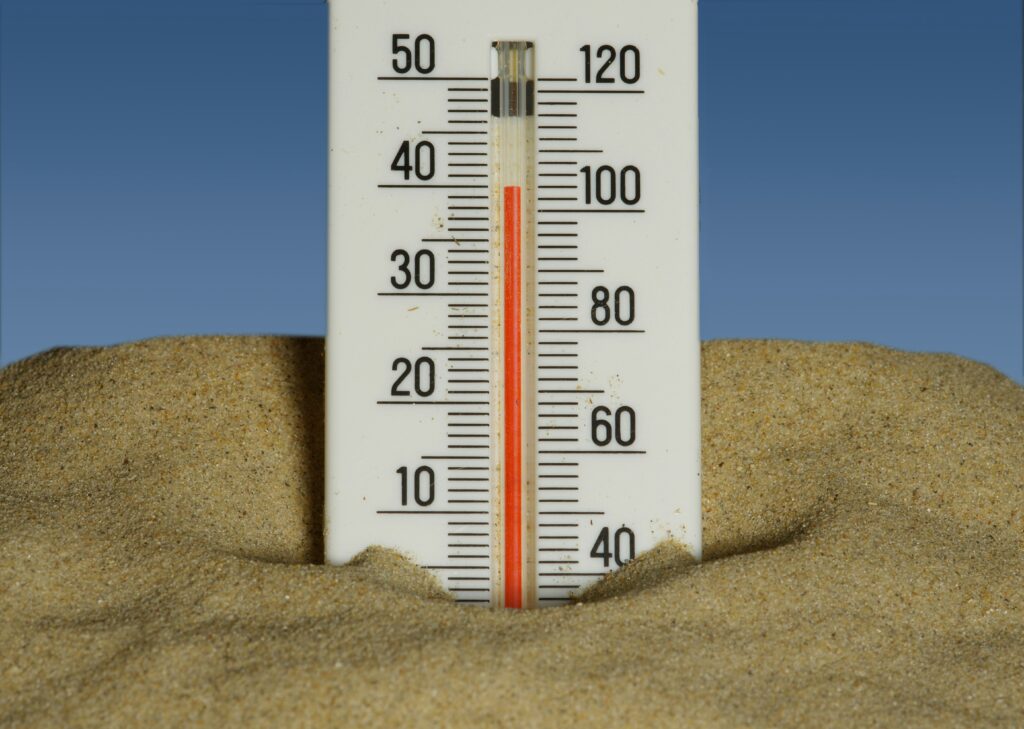
If you’ve stepped outside this week, you’ll know exactly why we’re writing this. The Met Office issued a Red Extreme Heat Warning for large parts of southern and central England and Wales, with temperatures forecast to push past 38°C and the all-time June record under serious threat. It’s the UK’s second official heatwave of 2026, and it’s a proper one — high humidity, tropical nights, the lot.
For most people, that means staying in the shade, drinking plenty of water, and keeping half an eye on the BBC weather app. For media planners and buyers, it means something else too: audience behaviour is shifting, channel by channel, in ways that are well worth understanding before you commit budget.
We’ve planned and bought media through enough British summers — including the record-breaking heat of 2022 — to know that “everyone just goes outside” is too simple a story. The reality is more interesting, and more useful for planning purposes.
Linear TV softens — but it doesn’t disappear
The broad pattern across UK broadcasting is that warm weather pulls people away from the living room sofa. That’s been true for years, and the underlying numbers in Ofcom’s Media Nations data confirm the wider trend: broadcaster TV viewing has been on a multi-year downward path across most age groups, driven by streaming and on-demand consumption picking up the slack. A heatwave doesn’t reverse that trend — it accelerates it for the duration of the warm spell, then viewing typically rebounds once temperatures drop.
The exception, as ever, is event programming. Major sport, in particular, holds its audience even in hot weather, because people will happily watch a big match with the doors open and a fan running rather than miss it. Anything appointment-based — news at moments of genuine national interest, live finals, must-watch drama — tends to be far more heat-resistant than daytime or early-evening filler programming.
What this means for buyers: if you’re running a campaign that leans on daytime or early peak slots this week, don’t be surprised if overnight figures come in soft. It’s not your creative — it’s the thermometer. Event and sport-adjacent TV inventory is the more heat-proof linear option right now.
Out of Home gets busier, not quieter
This is the one that catches people out. The instinct is to assume hot weather keeps people indoors and therefore reduces OOH exposure. In practice, the opposite tends to happen for large parts of the day. Hot, dry, sunny weather increases footfall in high streets, retail parks, transport hubs and leisure destinations — people are out shopping for fans, ice cream, paddling pools and barbecue supplies, eating outdoors, and travelling to parks, coasts and beer gardens rather than staying home with the curtains drawn.
UK OOH has had a strong run regardless of season — revenue hit an all-time high of £1.4 billion in 2024, up 7.7% year on year, with digital out of home (DOOH) now accounting for around two-thirds of that spend. That digital share matters specifically in heatwave planning, because DOOH inventory can flex creative by weather trigger — swapping in cooling, hydration or shade-related messaging exactly when the mercury climbs, rather than running a fixed seasonal campaign blind to the conditions outside.
What this means for buyers: transport hubs, retail parks and high streets are arguably more valuable inventory in a heatwave, not less — provided your creative speaks to the moment rather than ignoring it.
Radio holds steady, with a daypart shift
Radio is famously resilient to weather because so much of its listening happens in places heat doesn’t touch — the car, on a commute, in a garden via a Bluetooth speaker. What does shift is the shape of the listening day. Breakfast and drive-time hold firm because routines don’t change much even in extreme heat. Daytime listening can pick up in gardens and outdoor spaces, particularly among people working from home with windows open or those who’ve taken the sensible advice to avoid the midday sun and are pottering about rather than commuting.
What this means for buyers: radio remains one of the steadiest channels through a heatwave, which makes it a sensible anchor for campaigns you don’t want disrupted by a week of unusual weather.
Digital and social fill the gap
Here’s where the audience actually goes when they step away from the TV. Mobile usage tends to rise during hot weather — partly because people are outdoors with a phone in hand rather than seated in front of a screen, and partly because hot weather itself becomes content: people check forecasts repeatedly, share videos of the heat, post from beer gardens, beaches and paddling pools, and search for practical things — fans, sun cream, ice lollies, “is it too hot to [X].”
This is also where retail intent spikes hardest and fastest. The 2022 heatwave is the clearest recent illustration: supermarkets sold out of bottled water, ice cream and paddling pools, John Lewis reported a 709% year-on-year jump in fan and air conditioning sales, and Iceland recorded its best-ever day for ice cream sales. That kind of demand doesn’t build gradually — it spikes within a day or two of the forecast turning red, which is exactly the kind of window paid social and search can move fast enough to capture, and broadcast and print generally can’t.
What this means for buyers: if there’s a heat-relevant angle to your product or service, this week is a live opportunity — but the window is short. Plan creative variants now, not once the warning’s already been front-page news for three days. Our digital advertising team can help you move quickly here.
Print and press: a more resilient story than you’d think
National and regional press readership doesn’t swing wildly with the weather the way screen-based channels do, particularly among older, more habitual readers who maintain their routine regardless of temperature. Where we do see change is in when people read rather than whether they read — more likely on a tablet in the shade than with a physical paper at a kitchen table, and more likely consumed at a quieter moment in the day if the heat has disrupted the usual pattern. For our late space specialism in particular, severe weather is itself often the very story driving press attention that week, which keeps relevance high even as routines shift.
The planning takeaway
None of this means tearing up a media plan because the Met Office has issued a red warning. It means building enough flexibility into a plan that a week like this one becomes an opportunity rather than a disruption — leaning into OOH and digital where attention is actually heading, protecting radio as a steady anchor, being realistic about softer daytime TV delivery, and having heat-relevant creative ready to deploy at short notice across the channels that can move quickly.
We’ve been planning and buying through enough British summers to know the next heatwave is never far away. If you’d like a second pair of eyes on how your current media plan would hold up against a week like this one, we’re always happy to talk it through.
Stay cool out there.
James